Source ce aluminum catamaran yacht for Luxury, Sport, and Runabout
Find 30 ce aluminum catamaran yacht options ranging from 6m runabouts to 37m luxury vessels. Compare specifications including hull materials, engine types, and passenger capacities to identify the right vessel for your specific maritime needs; compare the available evidence and request quotations based on your requirements.
Key considerations
Products List


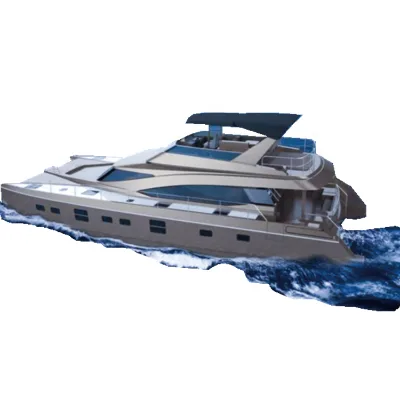
120FT Sail Catamaran Superyacht Mega-Yacht Mega-Catamaran Aluminum Sail Catamaran
$11990000.00 - $13990000.00
Moq: 1


37m Aluminium Catamaran 298seats Passenger Boat with Customized and OEM Service Yacht
$1800000.00 - $2500000.00
Moq: 1


15m Aluminum Luxury Yacht Passenger Transport and Sightseeing Catamaran Leisure Boat
$130000.00 - $150000.00
Moq: 1




Comprehensive Sourcing Guide
CE Aluminum Catamaran Yacht Sourcing Guide
Buyers seeking CE aluminum catamaran yachts must first distinguish between small recreational runabouts and large luxury vessels, as the supply chain and technical requirements differ significantly. The observed market data indicates a wide spectrum of options, ranging from compact 6-10.5m sport fishers to massive 120-foot luxury catamarans with capacities exceeding 298 persons. Understanding this variance is critical before initiating contact, as the engineering complexity for a 19m alloy steel vessel differs vastly from a 21m aluminum luxury yacht.
Procurement strategies must align with the specific propulsion and hull material requirements observed in listings, which include both gasoline and diesel engines alongside sail-assisted configurations. While some models feature outboard engines for smaller runabouts, larger luxury units typically utilize inboard propulsion systems with substantial fuel tanks, such as the 12,000-liter capacity noted in specific listings. Buyers should verify that the supplier's catalog explicitly matches the intended operational profile, whether it is high-speed sport fishing or long-range luxury cruising, to avoid mismatched specifications.
Product Scope and Observed Listing Signals
The current market listings reveal a diverse product scope that includes both inflatable and rigid hull options, though the core keyword specifically targets aluminum catamarans. Observed data confirms the availability of rigid, non-inflatable vessels with hull materials ranging from alloy steel to aluminum, catering to different durability and weight requirements. Buyers must carefully review the "Folded" status and "Inflatable" attributes to ensure they are evaluating the correct vessel type, as some listings may describe convertible or multi-purpose craft that do not fit the rigid catamaran definition.
Listing signals also highlight significant variations in overall length, with specific models ranging from 120 feet down to 10.5 meters, and others extending beyond 18 meters. The presence of specific model identifiers like "ds19," "DK57," and "Shine 120 Cat" suggests a fragmented market where standardization is often customized rather than uniform. Procurement teams should treat these model names as specific identifiers for distinct configurations rather than generic categories, ensuring that the requested vessel matches the exact length and beam dimensions required for the intended deployment.
Technical Specifications to Verify
Technical verification must begin with the hull dimensions, as observed listings show beam widths of 5 meters for smaller units and up to 8.8 meters for larger luxury catamarans. Buyers should confirm the Length Overall (LOA) and Beam (B) measurements against their operational constraints, noting that some vessels are specified by standard dimensions like "25M" or "37.2m" while others use precise metric or imperial measurements. The distinction between "Length" and "Overall Length" is crucial, as the latter includes overhangs or appendages that affect docking and storage requirements.
Propulsion and capacity data require rigorous cross-referencing, as listings indicate engine types ranging from outboard to inboard configurations with power outputs like 180kw per unit. Fuel capacity is another critical specification, with some large vessels listing tanks up to 12,000 liters, which directly impacts range and logistics planning. Additionally, passenger capacity varies from under 30 people to nearly 300, necessitating a clear definition of the intended load to ensure the selected vessel meets safety and comfort standards for the specific voyage profile.
Compliance and Safety Documentation
Compliance verification for CE aluminum catamaran yachts requires confirming adherence to specific maritime standards, which may be listed as "Customized" or tied to specific vessel dimensions like "120FT" or "37.2m." Buyers must request documentation proving that the vessel meets the relevant European CE directives for marine equipment and hull construction, as the "Customized" standard noted in listings implies that compliance is often project-specific rather than a blanket certification for all models.
Safety documentation should explicitly cover the vessel's stability, structural integrity, and emergency systems, particularly for high-capacity models carrying nearly 300 persons. The presence of a "Luxury Yacht" classification suggests additional requirements for interior safety, fire suppression, and life-saving appliances that must be verified against international maritime regulations. Procurement teams should ensure that the supplier provides a full compliance dossier, including material certificates for the aluminum or alloy steel hull, to validate that the construction meets the necessary safety thresholds for the intended operational environment.
Cost Drivers and Commercial Terms
Cost drivers for these vessels are heavily influenced by hull material, size, and customization levels, with observed price ranges spanning from approximately $10,680 to $14,000,000. The significant variance reflects the difference between small, entry-level runabouts and massive, fully equipped luxury catamarans with complex inboard systems and high passenger capacities. Buyers must analyze the total cost of ownership, including the specific engine type, fuel tank size, and the extent of interior finishing, as these factors dramatically impact the final purchase price.
Commercial terms often include a Minimum Order Quantity (MOQ) of 1, allowing for single-unit procurement, but packing and shipping methods vary between bulk cargo and containerized delivery. The "Bulk Cargo" and "Container" packing options noted in listings indicate that logistics costs will depend on the vessel's dimensions and whether it requires disassembly for transport. Buyers should clarify whether the quoted price includes the vessel in a "New" condition with all standard fittings or if additional customization costs apply, as the "Customized" standard suggests flexible but potentially variable pricing structures.
Supplier Qualification and Quality Control
Supplier qualification should focus on the manufacturer's ability to produce vessels with specific hull materials like aluminum or alloy steel and their experience with the observed model ranges. Buyers must verify the supplier's track record in delivering vessels that meet the "New" condition requirement and their capacity to handle the specific production standards, such as the "25M" or "37.2m" specifications found in the market data. A robust quality control process is essential to ensure that the aluminum hull construction meets the necessary structural integrity standards for high-capacity or high-speed applications.
Quality control protocols must include rigorous testing of the propulsion systems, whether outboard or inboard, and verification of the fuel tank capacity and safety features. Buyers should request detailed inspection reports that confirm the vessel's weight, beam, and length match the specifications provided in the listing, as discrepancies can lead to significant operational issues. Additionally, the supplier's ability to provide a "Customized" standard solution implies a need for close collaboration during the design and build phases to ensure the final product aligns with the buyer's specific operational and safety requirements.
Long-Term Procurement Checks
Long-term procurement checks should prioritize the availability of spare parts and the supplier's support infrastructure for the specific engine types and hull materials used. Given the diversity of models from 6 meters to 120 feet, buyers must ensure that the supplier can provide ongoing technical support and maintenance services for the specific configuration purchased, whether it is a small sport fisher or a large luxury catamaran. This includes verifying the availability of specialized components for aluminum hulls and the specific inboard or outboard engines identified in the initial listing.
Buyers should also establish a clear protocol for warranty claims and post-delivery inspections to ensure the vessel maintains its "New" condition over time. The "Customized" nature of many listings suggests that standard warranty terms may need to be negotiated to cover specific modifications or unique features. Regular audits of the supplier's production quality and adherence to the agreed-upon standards, such as the "120FT" or "37.2m" specifications, will help mitigate risks associated with long-term ownership and ensure the vessel remains compliant with evolving maritime regulations.
FAQs
What customization options are available for these catamarans?
Customization is available for these vessels to meet specific buyer requirements. The products listed include various models like the ds19 and DK57, allowing for tailored specifications. Buyers can request changes to dimensions or features while maintaining the core structural integrity of the alloy steel or aluminum hulls.
Which fuel types power the listed catamaran yachts?
The available catamarans utilize either gasoline or diesel fuel types for propulsion. Some models feature inboard engines while others use outboard configurations. This variety ensures that buyers can select a vessel that aligns with their specific operational needs and fuel availability preferences across different regions.
Can I find a catamaran with a capacity over 30 people?
Yes, several listed models support a passenger capacity greater than 30 people. Specific large vessels like the 120FT Sail Catamaran can accommodate up to 298 persons. These high-capacity options are ideal for commercial tours or large private events requiring significant onboard space and stability.
What are the typical length specifications for these yachts?
Length specifications vary significantly across the product range, from 6 to 10.5 meters up to 120 feet. Some models are specifically designed as 19-meter vessels, while others exceed 18 meters. Buyers can choose from compact runabouts or expansive luxury catamarans depending on their intended usage and docking constraints.
How are these catamarans packaged for international shipping?
Packaging methods include bulk cargo and container shipping depending on the specific model size. Larger vessels like the 37m catamaran may require specialized container arrangements. This ensures safe transport of the aluminum or alloy steel hulls while minimizing damage risks during long-distance transit from the manufacturing origin in China.
What is the minimum order quantity for these yachts?
The minimum order quantity is one unit for most of the listed catamaran models. This low threshold allows individual buyers or small companies to purchase directly without needing to form large consortia. It facilitates flexible sourcing for both single-unit acquisitions and small fleet expansions.
Are these catamarans new or used condition?
All listed products are in new condition, ensuring they are ready for immediate deployment. Buyers receive factory-fresh vessels with no prior usage history. This guarantees that the hull materials, engines, and interior fittings meet the latest manufacturing standards and performance expectations for luxury or sport applications.